Every pizzeria knows the order: a large with eight toppings, requested by someone who believes more is more. What arrives is a pie with a soft center, toppings sliding in a heap, and flavors so crowded that none of them register. Pizza is a structure with real load limits. The crust must crisp while carrying cheese, sauce, and toppings that release water as they cook, and the oven's heat is finite. Exceed the structure's capacity and the pie fails in predictable ways.
This guide explains the balance that makes a pie work: how many toppings a crust can honestly carry, which ingredients bring water with them, and how a specialty combination like a loaded house pie is engineered differently from a build-your-own that got out of hand.
The physics of a loaded pie
Each topping adds weight and, more importantly, moisture. Cheese releases oil and water. Vegetables release water in volume. The oven must drive that water off while crisping the crust beneath, and a heavily loaded center is where the battle is lost: the middle stays wet, the crust there steams instead of baking, and the slice folds and sheds its toppings at the first lift.
This is why the same toppings taste better across two pizzas than stacked on one. Doubling the pies doubles the crust surface doing the crisping, keeps each layer thin enough to cook through, and gives every topping room to roast rather than stew. For a group that wants variety, two medium combinations will outperform one overloaded large on every measure except the receipt.
The two-to-three topping rule
For a build-your-own pie, two or three toppings is the range where a pizza tastes like a composition instead of a crowd. One meat and one or two vegetables, or a meat, a vegetable, and a finishing item like onion or olive, is the classic architecture for a reason: each element survives cooking distinctly, the cheese still shows, and the crust finishes crisp from edge to center.
Cheese counts in the balance even though nobody lists it as a topping. Extra cheese is the most requested overload after the topping pile-on, and it carries the same physics: more moisture, more oil, a softer center, and a slice that pulls apart. Order extra cheese on a thin, lightly topped pie if you love it. Ordering it on a loaded pie is asking the structure to fail twice at once.
Water rankings: which toppings threaten the crust
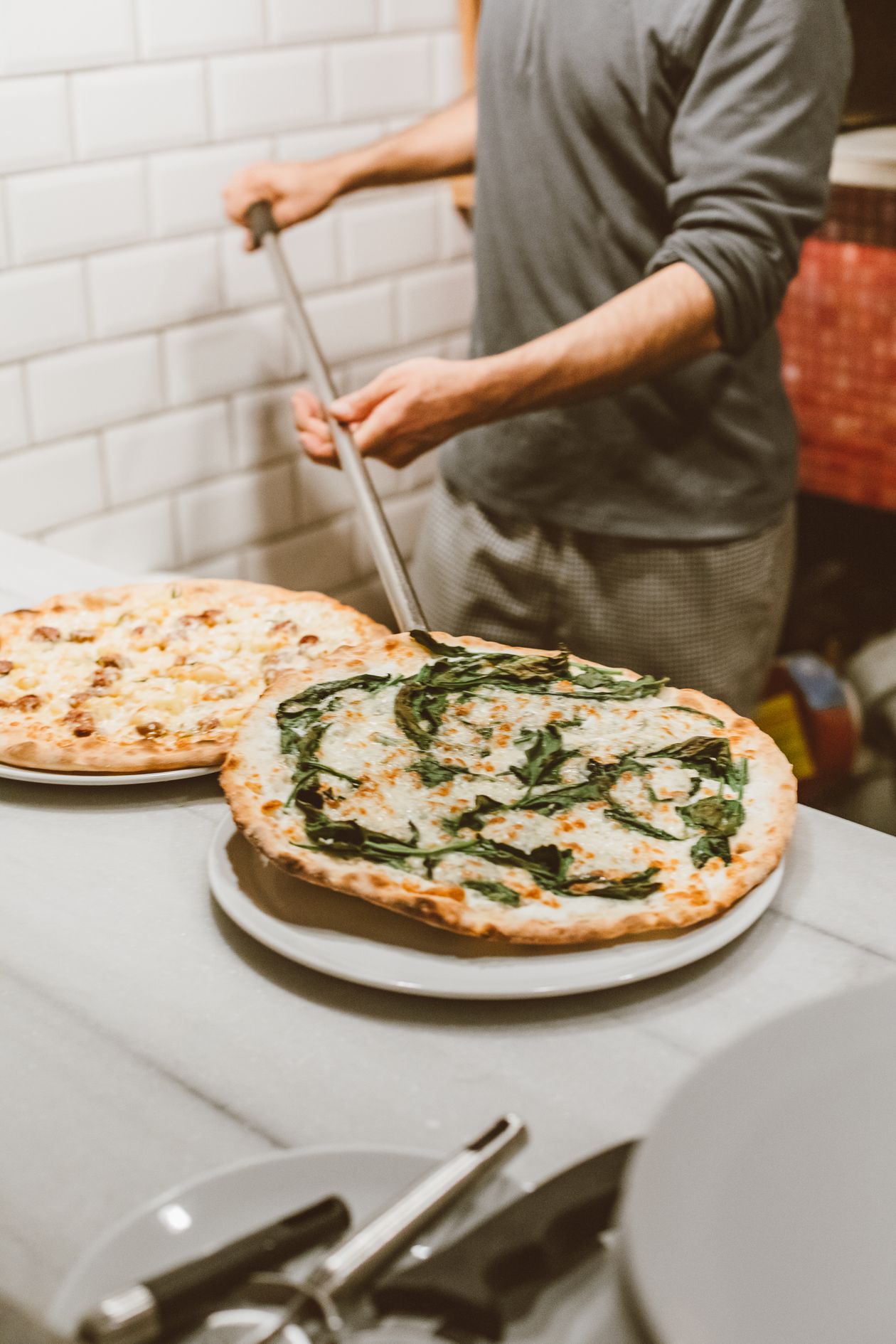
Fresh mushrooms, raw onions, peppers, fresh tomatoes, spinach, and pineapple all release significant water as they bake. None are forbidden, they are the soul of a vegetable pie, but two watery toppings on one pie is a plan and four is a flood. Kitchens manage this by slicing thin, distributing evenly rather than heaping at the center, and sometimes pre-cooking the wettest items, all moves you can support by not demanding every vegetable in the case at once.
At the dry end sit the cured meats, pepperoni, ham, bacon, sausage, which render fat rather than water and actually help a top brown and crisp. This is one reason meat-heavy specialty pies hold together better than garden pies of the same weight, and why a veggie pie ordered well done is a legitimate and helpful request rather than a fussy one.
| Topping type | Water load | Ordering note |
|---|---|---|
| Pepperoni, sausage, ham, bacon | Low, renders fat | Helps browning, safe in pairs |
| Mushrooms, peppers, onions | High | Two per pie is a plan, four is a flood |
| Fresh tomato, spinach, pineapple | High | Slice thin, spread wide, consider well done |
| Extra cheese | Adds oil and moisture | Best on thin, lightly topped pies |
How house specialty pies are engineered
A loaded house specialty, the kind of pie a place names after itself, is not a build-your-own with more items. It is a tested combination: specific toppings in specific proportions, often with the wettest ingredients balanced by cured meats and the whole pie's thickness and bake time dialed to that load. The kitchen has made it a thousand times and knows its cook time to the half minute. It holds up because it was engineered, not accumulated.
That is the practical takeaway for ordering at a place like The Pizza Man in Clover: when you want a big, loaded pie, order the house's version of it rather than improvising your own eight-item stack. When you want to build your own, build it like an engineer: two or three toppings, one of them dry, spread to the edges, and no doubling of the cheese on top of a crowd.
Ordering and eating for structure
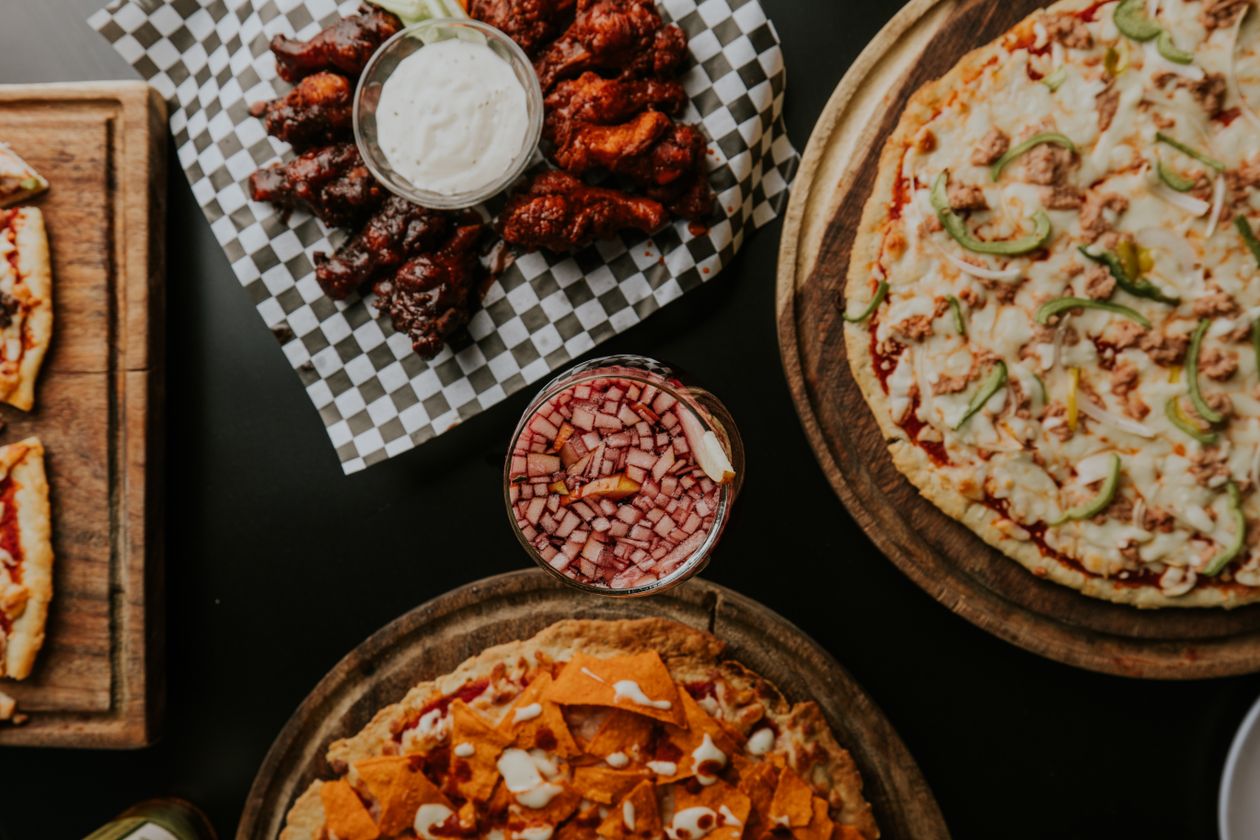
A few requests genuinely help a pie. Asking for the pizza well done adds crispness insurance to a loaded or vegetable-heavy order. Asking for toppings spread edge to edge, rather than center-heaped, evens the bake. At the table, letting a very hot loaded pie rest two minutes before slicing lets the cheese set enough to stay on the slices, a patience that pays out in every bite staying dressed.
And eat the center slices first when sharing a loaded pie, because they are the most fragile at their hottest and the most improved by being eaten exactly then. Structure in pizza is not a metaphor. It is engineering you can taste, and restraint at the ordering stage is the strongest beam in it.
Common questions
How many toppings should a pizza have?
Two or three on a build-your-own pie is the sweet spot. More than that and the crust cannot crisp under the load, especially in the center.
Why is my pizza soggy in the middle?
Moisture overload is the usual cause: watery vegetables, extra cheese, or too many toppings release more water than the bake can drive off. Ordering well done helps.
Is a loaded house specialty different from building my own?
Yes. House specials are tested combinations in set proportions, with bake times dialed in. They hold up better than an improvised stack of many toppings.
Photos in this guide are representative stock images.
← All guides from The Pizza Man← Back to The Pizza Man