Group pizza orders fail in two directions: the heroic over-order that fills a refrigerator with boxes, and the optimistic under-order that ends with adults negotiating over the last slice. Both come from the same error, guessing at the group instead of counting it. Pizza is one of the few crowd foods with actual math behind it: slices per pie are known, appetites by group type are predictable, and the whole order can be sized on paper in two minutes.
This guide gives the working numbers for ordering from a Clover pizzeria, the topping strategy that ends the annual argument, and the timing move that gets a big order out of the kitchen hot instead of stacked behind the dinner rush.
The base numbers
Start with slices. A large pizza typically cuts into eight slices. Adults at a normal meal eat two to three slices, planning on three per adult is the safe standard for a pizza-focused event. Children under ten average one to two slices. Teenagers, especially teenage boys at a team event, should be counted as one and a half adults, a correction every experienced team parent will confirm from bitter experience.
Divide total slices needed by eight and round up to whole pies, then subtract a pie if side dishes are substantial. Wings, a salad, or garlic knots genuinely reduce pizza intake, roughly by a slice per person when they are plentiful. A group total worked out this way lands within a pie of correct almost every time, which is all the precision this problem honestly supports.
Worked examples for real rooms
Twenty adults at a birthday or office event: plan on roughly fifty to sixty slices of appetite, which is seven to eight large pizzas, fewer if wings and salad are in play, landing at six to seven. Ten adults and eight kids at a family gathering: about thirty adult slices and twelve kid slices, call it forty-two, which is six pizzas with a small cushion. The cushion matters more than the precision. One extra pie is a cheap insurance policy and tomorrow's lunch.
Watch the composition traps. A group of mostly men after physical work eats at the top of every range. A group eating late after snacks all afternoon eats at the bottom. An event where pizza is one station among several foods is not a pizza event at all, and the per-person count drops to one or two slices. Counting the event type honestly is worth more than any formula.
The topping split that ends arguments
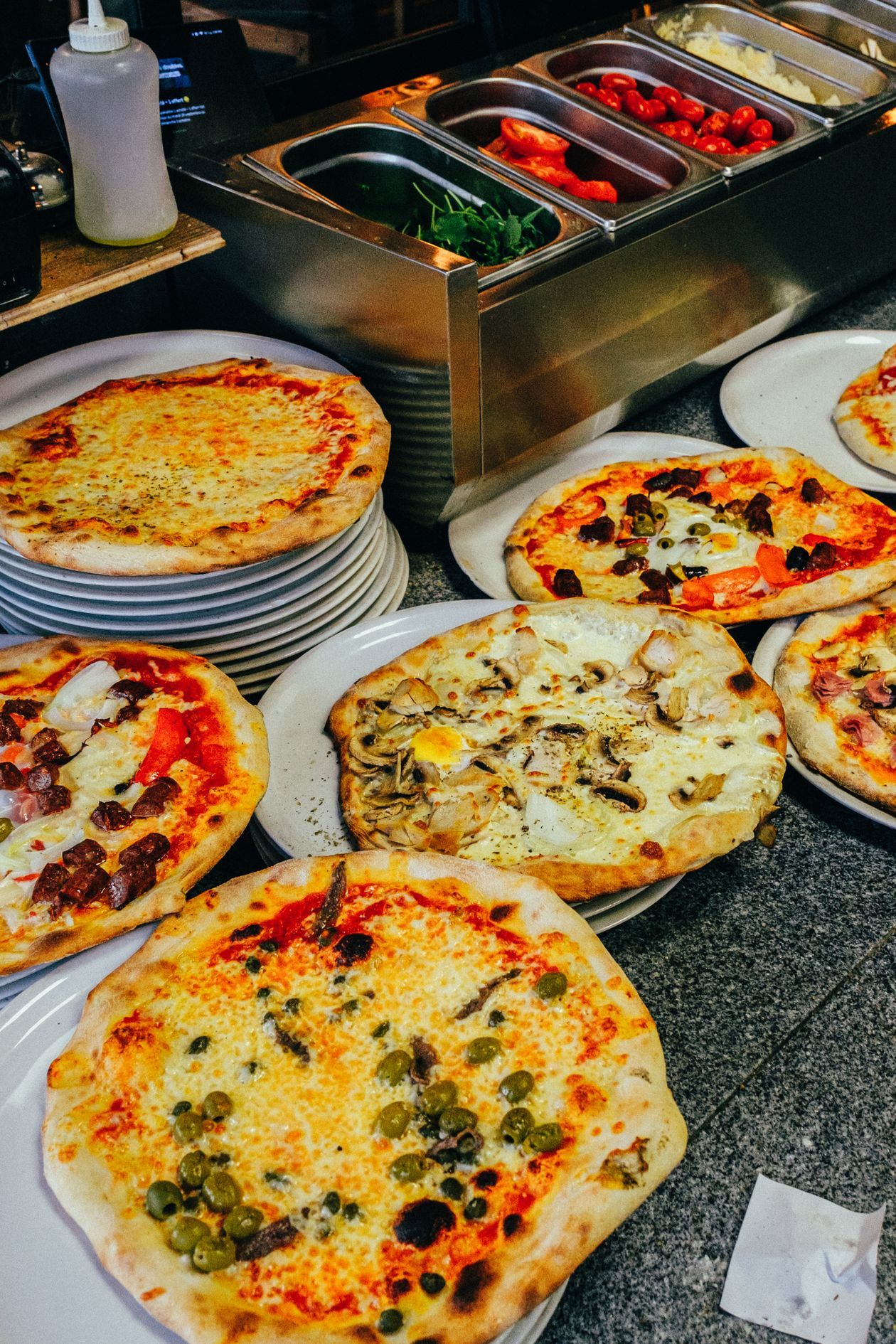
Divide the order in thirds. One third cheese and pepperoni, the universal baseline that every group actually eats, including most of the people who claimed to want something exotic. One third the house specialty or meat-loaded pie, for the committed. One third adventurous: vegetables, specialty combinations, the pie the organizer wanted. This split guarantees nobody is stranded and the interesting pizzas get eaten at their proper rate, which is slower than their advocates predict.
Handle dietary needs as whole pies, not fractions, when the need is real. A vegetarian pie that is half-claimed by the general crowd disappears before the vegetarian reaches it, so order it, put it where its person can get to it, and let the thirds absorb everyone else. Specialty pies for one person's allergy follow the same logic and should be the first slices served, not the last box opened.
Timing a big order with a real kitchen
Big orders and the Friday dinner rush collide at every pizzeria in America. The fixes are simple: order ahead for a set time rather than at the moment of hunger, and if the event is on a peak night, shift the eating time thirty minutes earlier or later than the crowd's instinct. A kitchen that knows a ten-pie order is coming at 6:30 builds it into the oven flow. A ten-pie order that arrives unannounced at 6:30 joins a queue.
For delivery, confirm the address details and a phone number that someone will actually answer, and remember that delivery windows stretch on busy nights at exactly the moment your group is hungriest. Pickup is the control option: one driver, order checked at the counter, pies home on your schedule. For a large group at a house in Clover, pickup usually beats delivery on both temperature and timing.
What to do with the inevitable leftovers
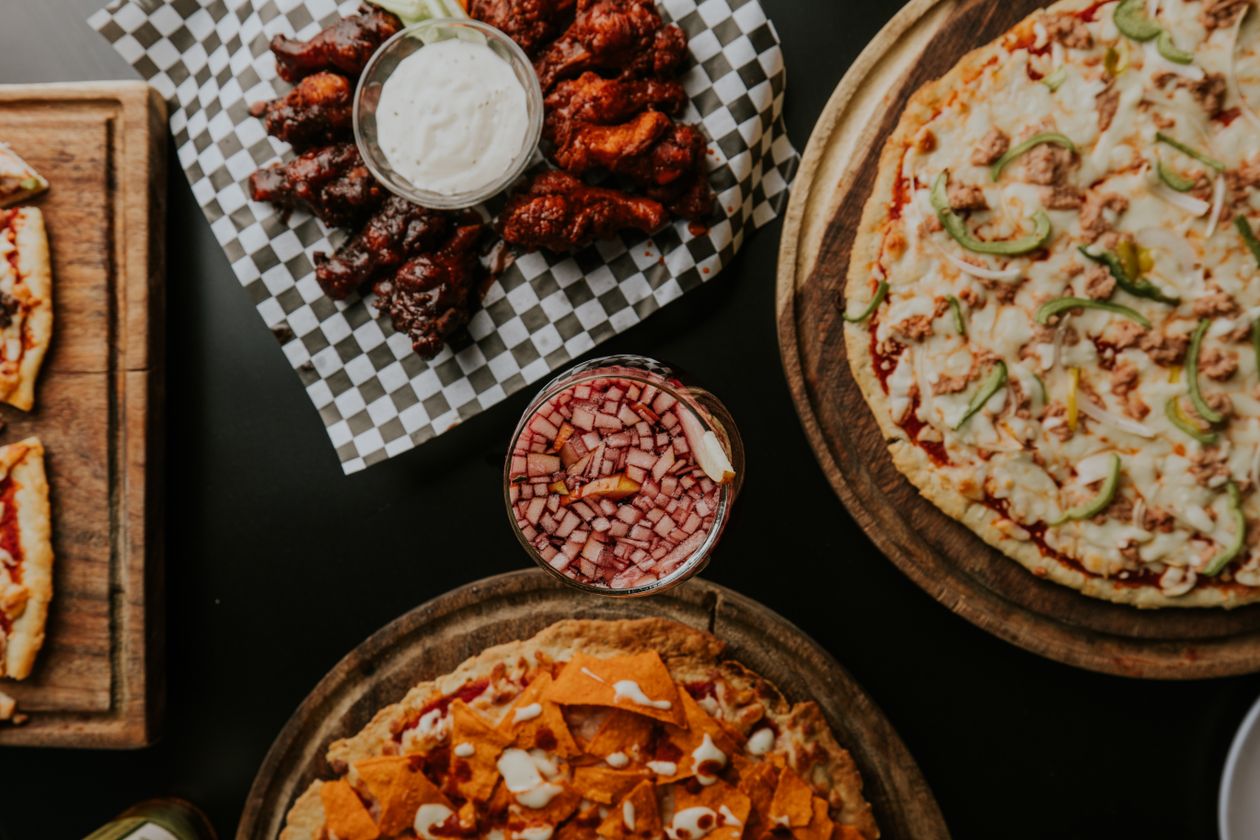
Order with a leftover plan and the cushion pie stops being waste. Pizza keeps two to three days refrigerated in a sealed container rather than in its box, which dries it out, and reheats well in a hot skillet or oven, a topic with its own strong opinions. Slices frozen between parchment keep for a month and reheat from frozen in a hot oven acceptably, which makes them a legitimate packed lunch reserve.
Send slices home with guests in the moment, while people are still standing around the boxes. Leftover pizza distributed at the door is hospitality. The same pizza discovered in your refrigerator on Tuesday is a chore. The difference is five minutes of handing out paper plates as people leave.
Common questions
How many slices should I plan per person?
Plan on three slices per adult, one to two per young child, and count teenagers as one and a half adults. A large pizza usually has eight slices.
How many large pizzas feed 20 adults?
Seven to eight if pizza is the whole meal. With generous wings and salad, six to seven usually covers it, with one extra pie as cheap insurance.
What topping split works for a mixed group?
Thirds: cheese and pepperoni as the baseline, a meat or house specialty third, and an adventurous third. Order whole dedicated pies for genuine dietary needs.
Photos in this guide are representative stock images.
← All guides from The Pizza Man← Back to The Pizza Man